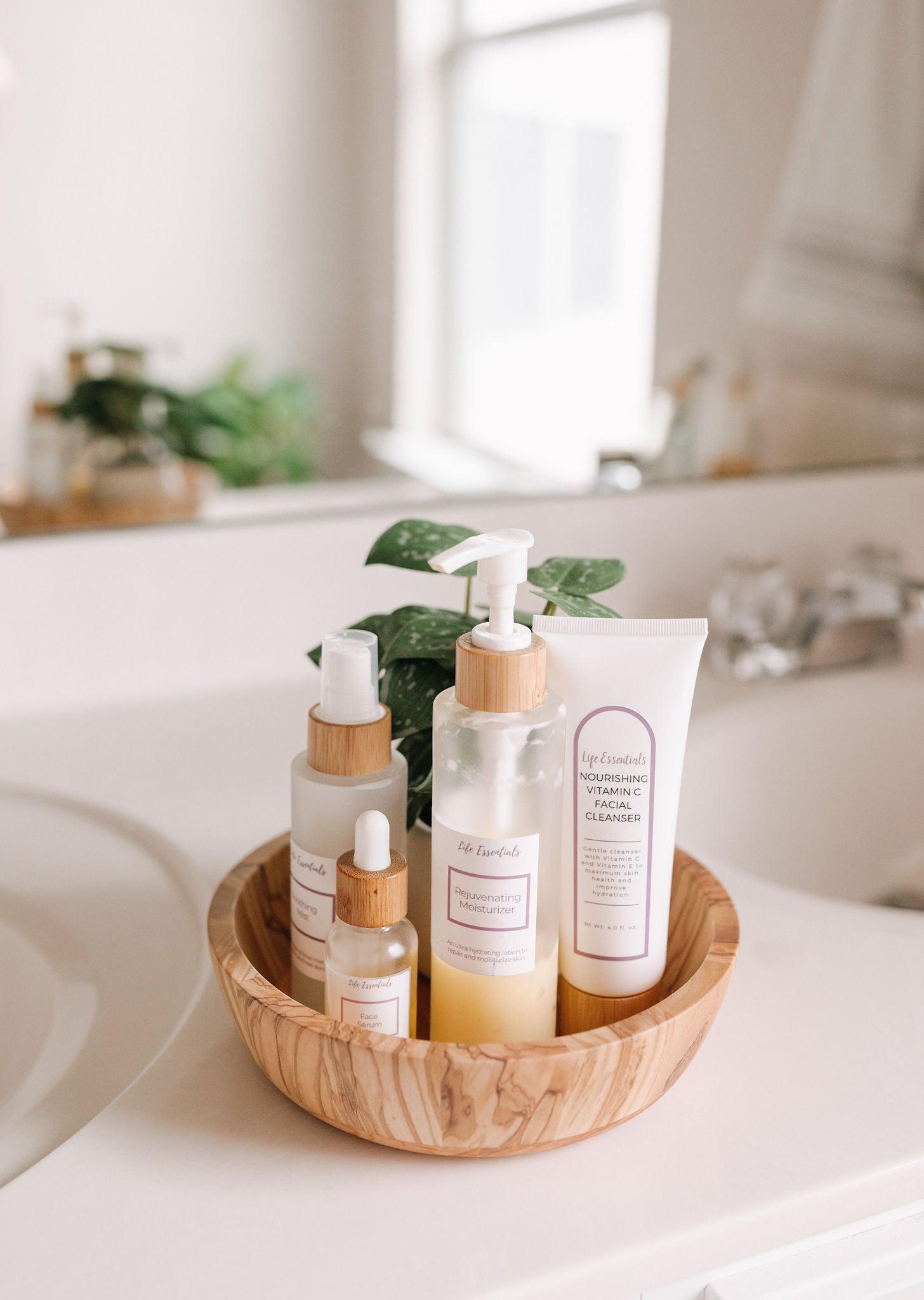
Skincare doesn't have to involve a bathroom shelf full of bottles.
In fact, one of the easiest mistakes to make when starting a skincare routine is doing too much.
You buy a cleanser, toner, serum, exfoliant, face oil, mask, moisturizer, eye cream, and three other products because someone online promised that they would transform your skin.
Then your skin becomes irritated, you don't know which product caused it, and suddenly skincare feels like a full-time job.
A simple routine can be much easier to maintain.
And if you prefer a more natural approach, you don't necessarily need complicated formulas or dozens of products. The goal is to focus on gentle cleansing, hydration, sun protection, and consistency.
Here's how to build a simple routine that you can realistically stick with.


1. Start With the Basics


A basic skincare routine can be surprisingly short.
For most people, the foundation is:
Morning
- Gentle cleanse or rinse
- Moisturizer
- Sunscreen
Evening
- Cleanser
- Moisturizer
That's it.
You can add other products later if you have a specific reason for using them.
The important thing is to establish the basics first.
If a simple routine works well for you, there's no requirement to make it more complicated.
2. Understand What "Natural" Actually Means
The word natural sounds reassuring, but it doesn't automatically mean a product is safer or better for your skin.
Natural ingredients can still cause irritation or allergic reactions.
Essential oils, for example, are often marketed as natural skincare ingredients, but they can be irritating for some people, particularly when used improperly or in high concentrations.
Instead of focusing only on whether something is "natural," look for products that are:
- Gentle
- Appropriate for your skin type
- Properly formulated
- Fragrance-free or low-fragrance if you're sensitive
- Supported by reliable evidence
- Easy for you to use consistently
Natural can be a preference.
It shouldn't be the only measure of whether a product belongs in your routine.
3. Know Your Skin Type
Before buying products, spend some time paying attention to how your skin behaves.
Dry skin
Your skin may feel tight, rough, or flaky.
Look for gentle cleansers and moisturizers that support hydration.
Oily skin
Your skin may become shiny quickly, particularly around the forehead, nose, and chin.
A lightweight moisturizer can still be useful.
Combination skin
Some areas may be oily while others feel dry.
You may need a balanced approach rather than extremely rich or extremely drying products.
Normal skin
Your skin generally feels comfortable and balanced.
Your routine can remain simple.
Sensitive skin
You may experience redness, burning, itching, or irritation easily.
Keep your routine especially simple and introduce new products cautiously.
Your skin doesn't need to fit perfectly into one category.
What matters is noticing what your skin actually needs.
4. Choose a Gentle Cleanser


A cleanser's job is simple:
Remove dirt, excess oil, sunscreen, makeup, and other buildup without leaving your skin feeling stripped.
You don't need a cleanser that leaves your face feeling extremely tight or "squeaky clean."
That tight feeling can actually be a sign that your skin's natural oils have been removed too aggressively.
For a simple routine, choose a gentle cleanser that works comfortably with your skin type.
If your skin feels dry or uncomfortable after washing, your cleanser may be too harsh—or you may be cleansing too frequently.
5. Don't Underestimate Moisturizer
Moisturizer isn't just for people with dry skin.
Even oily or combination skin can benefit from appropriate hydration.
A moisturizer helps support the skin barrier and can make your skin feel more comfortable.
Look for a formula that suits your preferences and skin type.
If you dislike heavy products, choose something lightweight.
If your skin tends to feel dry, you may prefer a richer formula.
There's no prize for choosing the thickest moisturizer on the shelf.
The best moisturizer is one you'll actually use.
6. Sunscreen Is the Step You Shouldn't Skip


If you're building a skincare routine, daily sun protection deserves a place near the top of your list.
UV exposure contributes to premature skin aging and can worsen pigmentation.
Choose a broad-spectrum sunscreen with an appropriate SPF and apply it as directed.
If you spend extended periods outdoors, reapplication becomes particularly important.
And remember that sunscreen isn't really an optional "extra" step if protecting your skin from UV exposure is one of your goals.
You can have the most elaborate skincare routine in the world, but skipping sun protection can undermine it.
7. Add One Extra Product at a Time
Once your basic routine is working, you may want to experiment with additional products.
That's completely fine.
Just don't introduce five new products simultaneously.
If you add:
- A serum
- An exfoliant
- A face oil
- A mask
- A new cleanser
all in the same week, you won't know what your skin likes—or dislikes.
Instead, introduce one new product at a time.
Give yourself enough time to see how your skin responds before adding something else.
This makes troubleshooting much easier.
8. Be Careful With DIY Skincare


The internet is full of homemade skincare recipes involving ingredients from your kitchen.
Some may sound harmless.
But your skin isn't the same as a cooking surface.
Lemon juice, baking soda, undiluted essential oils, and abrasive scrubs can cause irritation or damage the skin barrier.
"Natural" doesn't mean "safe to put directly on your face."
If you enjoy DIY beauty treatments, be cautious about ingredients and concentrations.
When in doubt, a properly formulated skincare product is generally easier to evaluate and use consistently.
9. Don't Exfoliate Just Because You Can
Exfoliation can make skin feel smoother, but more isn't necessarily better.
Over-exfoliating can cause irritation, dryness, redness, and sensitivity.
If you want to use an exfoliating product, start slowly and follow the product's directions.
You don't need to scrub your face aggressively to get clean skin.
Gentle is usually better.
And if your skin is already irritated, adding more exfoliation is probably not the solution.
10. Keep Your Routine Consistent


Skincare isn't usually about finding one magical product.
Consistency matters much more.
A simple routine that you follow regularly is generally easier to maintain than an elaborate routine that you use occasionally.
Try creating small habits.
For example:
Morning: Wash → Moisturize → Sunscreen
Evening: Cleanse → Moisturize
That's your foundation.
Everything else is optional.
11. Patch-Test New Products
Whenever you're trying a new skincare product, especially if you have sensitive skin or a history of reactions, consider patch-testing according to the product's instructions.
Apply a small amount to an appropriate test area and monitor how your skin responds.
If you experience significant irritation, swelling, burning, or another concerning reaction, stop using the product.
If you have persistent or severe skin concerns, it's better to speak with a dermatologist rather than trying to solve everything through trial and error.
12. Don't Compare Your Skin to Social Media


This might be the most important skincare advice of all.
Online photos can be affected by:
- Lighting
- Makeup
- Filters
- Camera settings
- Editing
- Professional treatments
- Genetics
Your skin doesn't need to look like an edited photograph.
Healthy-looking skin can have pores, texture, freckles, lines, blemishes, and unevenness.
A skincare routine should help you care for your skin, not make you feel like your face needs to be completely transformed.
A Simple Natural-Inspired Routine
If you want to keep things extremely straightforward, start here.
Morning
1. Gentle cleanse or rinse
Remove overnight buildup without over-cleansing.
2. Moisturizer
Choose something comfortable for your skin.
3. Broad-spectrum sunscreen
Apply as directed and reapply when appropriate.
Evening
1. Cleanser
Remove sunscreen, makeup, dirt, and excess oil.
2. Moisturizer
Give your skin overnight hydration and support.
Optional
Once your basic routine is working, introduce one targeted product based on a specific goal.
What You Don't Need
You don't necessarily need:
❌ Ten different serums
❌ A separate product for every part of your face
❌ Aggressive scrubs
❌ Expensive luxury products
❌ A complicated morning routine
❌ A complicated nighttime routine
❌ DIY ingredients just because they're natural
❌ Every viral skincare product
You need a routine that fits your skin and your life.
Final Thought
A good skincare routine doesn't have to take 30 minutes every morning and night.
Start with the fundamentals: gentle cleansing, appropriate hydration, and daily sun protection.
Then pay attention to how your skin responds.
If you want to add something, add one product at a time. Avoid aggressive DIY treatments, don't over-exfoliate, and remember that "natural" isn't automatically synonymous with "better."
Most importantly, give your routine time.
Your skin doesn't need another trend.
It needs consistency, patience, and a routine you can actually stick with. 🌿✨