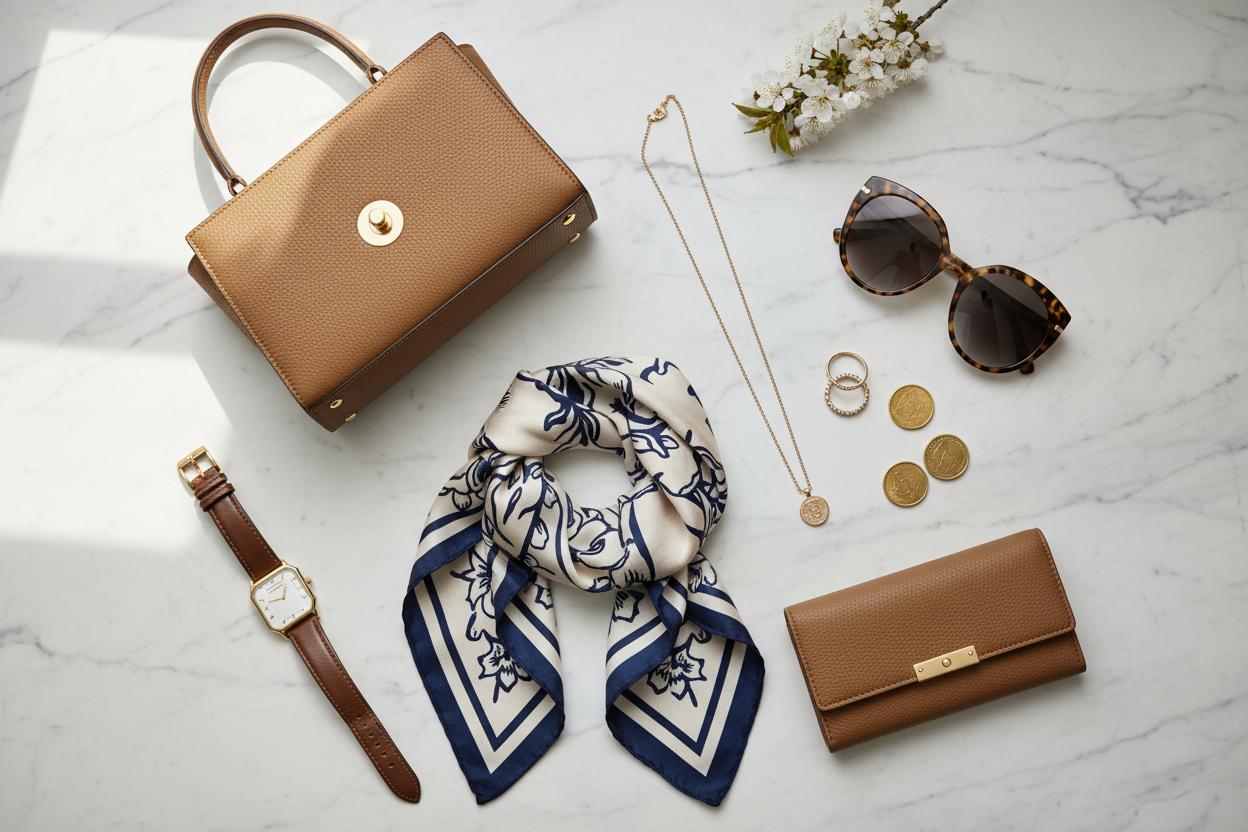
A great outfit doesn't always require a completely new wardrobe. Sometimes, the smallest changes can make the biggest difference.
A simple pair of jeans and a T-shirt can look casual with sneakers and a canvas bag, polished with loafers and delicate jewelry, or more eye-catching with a statement bag and sunglasses.
That's the magic of accessories.
Jewelry, handbags, belts, scarves, sunglasses, watches, shoes, and even hair accessories can change the mood of an outfit without requiring you to buy completely new clothes.
The best part is that accessorizing doesn't have to be complicated. Once you understand a few basic principles, you can start creating more intentional outfits with pieces you already own.

Why Accessories Matter
Accessories are the finishing touches that help bring an outfit together.
Think of your clothes as the foundation. Accessories add personality, color, texture, and visual interest.
A simple outfit can instantly feel more complete with a necklace or pair of earrings. A belt can change the proportions of an outfit, while a scarf can introduce a completely different color.


Accessories also allow you to change the same outfit for different situations. A basic dress might work for the office with a structured bag and simple jewelry, then become suitable for dinner with statement earrings and a different pair of shoes.
This makes accessories particularly useful if you're trying to build a versatile wardrobe.
Start With One Statement Piece
One of the easiest ways to accessorize is to choose one piece that gets attention.
It could be:
- A bold necklace
- Statement earrings
- A colorful handbag
- Oversized sunglasses
- A patterned scarf
- A distinctive belt
- A statement watch
Once you've chosen your focal accessory, keep the other pieces relatively simple.
This prevents everything from competing for attention.
For example, if you're wearing large statement earrings, you might skip a large necklace and choose a simple bracelet instead.
The goal isn't to wear as many accessories as possible. It's to create balance.
Don't Underestimate Jewelry
Jewelry is one of the easiest ways to change an outfit.
Even a simple white T-shirt and jeans can look completely different with a necklace, earrings, rings, and a bracelet.
If you're new to accessorizing, start with a few versatile pieces:
Everyday necklace: A simple chain or pendant can work with many necklines.
Small earrings: Studs or small hoops are easy for everyday outfits.
Simple bracelet: A delicate bracelet adds detail without overwhelming your look.
Everyday rings: One or two rings can add personality.
You don't need a huge jewelry collection. A few pieces that you genuinely enjoy wearing are usually more useful than a drawer full of accessories you rarely reach for.
Experiment With Layered Jewelry
Once you're comfortable with simple jewelry, you can experiment with layering.
Try wearing two or three necklaces of different lengths.
You can also combine several thin bracelets or wear a few simple rings together.
The key is to create some difference between the pieces. If every necklace has exactly the same length and thickness, the combination can look crowded.
For a cleaner appearance, choose pieces that share something in common, such as the same metal tone or a similar design style.
Layered gold jewelry, for example, can create a cohesive look when paired with a simple neutral outfit.
Use a Belt to Change the Shape of an Outfit
Belts are one of the most underrated accessories.
A belt can add structure, define the waist, and visually change the proportions of an outfit.
Try adding a belt to:
- Jeans
- Trousers
- Dresses
- Long cardigans
- Oversized shirts
- Skirts
A simple black or brown belt is a great starting point because it can work with many outfits.
You can also use a more noticeable buckle or colorful belt when you want the accessory itself to become part of the statement.
Scarves Are Surprisingly Versatile


A scarf can completely change a simple outfit.
You can wear it traditionally around your neck, tie it to a handbag, wrap it around your hair, or use it as a small color accent.
A patterned scarf can be particularly useful when you're wearing neutral clothing.
For example, imagine a simple outfit consisting of a white shirt and jeans. Add a colorful scarf and suddenly the outfit has more personality.
You don't necessarily need to buy a new top or jacket. One accessory can create a new look.
Let Your Bag Do Some of the Work
Your handbag is both practical and stylish.
Instead of thinking of a bag only as something that carries your belongings, consider how its color, shape, and material interact with your outfit.
A structured bag can make a casual outfit feel more polished.
A relaxed tote can make an outfit feel more casual.
A colorful crossbody can introduce a pop of color.
A small evening bag can instantly make a simple dress feel more appropriate for a special occasion.
If you're building a versatile accessory collection, neutral bags are generally easy to combine with different outfits.
Don't Forget Your Shoes
Shoes are technically accessories, but they can have an enormous effect on the overall appearance of an outfit.
Consider how different shoes can change the same pair of jeans and shirt:
Sneakers: Casual and relaxed
Loafers: Polished and smart
Ankle boots: Stylish and versatile
Sandals: Light and casual
Heels: Dressier and more formal
This is why having a few different footwear options can give you more outfit combinations without buying additional clothing.
Sunglasses Can Change the Mood
Sunglasses aren't only useful on sunny days.
They can also become an important part of your outfit.
A classic pair of black sunglasses can create a clean, timeless appearance. Tortoiseshell frames can feel warmer and more vintage-inspired, while colorful or oversized frames can make a stronger statement.
Choose a shape that you enjoy wearing and that feels comfortable.
You don't need to follow every sunglasses trend. A style you genuinely like will probably get much more use.
Match Your Accessories — But Don't Overdo It
You don't have to match every accessory perfectly.
In fact, trying to make your shoes, handbag, belt, jewelry, and sunglasses all identical can sometimes make an outfit feel overly coordinated.
Instead, look for connections between your accessories.
For example:
- Brown belt + brown bag
- Gold jewelry + warm-toned accessories
- Black shoes + black handbag
- Colorful scarf + small matching color in your bag
The pieces don't have to be identical.
They simply need to look like they belong together.
Pay Attention to Your Outfit's Neckline
Your neckline can help determine which necklace works best.
A high neckline may work better with longer necklaces or no necklace at all.
A simple crew neck can work beautifully with a short pendant.
A V-neck can be complemented by a necklace that follows the shape of the neckline.
Of course, these aren't strict rules.
The most important thing is how the combination looks and feels to you.
Think of these suggestions as starting points rather than requirements.
Use Color to Make Simple Outfits More Interesting
Accessories are an easy way to introduce color without committing to a brightly colored wardrobe.
If most of your clothes are black, white, beige, gray, navy, or denim, accessories can provide small pops of color.
Try:
Neutral outfit + red handbag
White shirt + colorful scarf
Black dress + gold jewelry
Jeans + bright sneakers
Beige outfit + patterned bag
This approach lets you experiment with color while keeping your main wardrobe relatively simple.
Try the Three-Accessory Rule
If you often don't know when to stop accessorizing, try a simple starting point:
Choose three accessories.
For example:
Earrings + watch + handbag
Or:
Necklace + belt + sunglasses
Or:
Scarf + rings + boots
Three accessories are enough to make an outfit feel intentional without requiring you to think about every possible detail.
You can always add or remove something after looking at the complete outfit.
Accessorize According to the Occasion
The same accessories won't work equally well everywhere.
For work, you might prefer simple jewelry, a structured bag, and classic shoes.
For a casual weekend, sneakers, sunglasses, and a relaxed crossbody bag might be better.
For an evening event, statement earrings, a clutch, and dressier shoes can create a more polished appearance.
Think about the overall message you want your outfit to communicate.
Accessories can help you adjust the same basic clothing for different environments.
Don't Buy Accessories Just Because They're Trendy
Trends can be fun, but you don't need to follow every accessory trend.
Before buying something, ask yourself:
Will I wear this regularly?
Does it work with clothes I already own?
Is it comfortable?
Does it fit my personal style?
Can I create several outfits with it?
If the answer is yes, it's more likely to become a useful addition to your wardrobe.
A timeless accessory that you wear frequently is usually more valuable than a trendy piece that sits in your closet.
Small Changes Can Refresh Your Existing Wardrobe
One of the best things about accessorizing is that it can make old outfits feel new.
Instead of buying another shirt, try styling your existing shirt differently.
Add a belt.
Change your earrings.
Switch your handbag.
Add a scarf.
Put on different shoes.
Try sunglasses.
These small changes can make familiar clothing feel completely different.
That is where accessories really shine: they expand the possibilities of the wardrobe you already have.
Final Thoughts
Accessorizing doesn't have to be complicated or expensive.
The biggest impact often comes from small details — a necklace, a belt, a scarf, a handbag, a pair of earrings, or a different pair of shoes.
Start with a few versatile pieces and learn how they work with your existing wardrobe.
Choose one focal accessory when you want to make a statement, keep the rest balanced, and don't be afraid to experiment with colors, textures, and combinations.
Most importantly, use accessories to express your personality.
Your clothes create the foundation, but the little details are what make an outfit feel like yours.