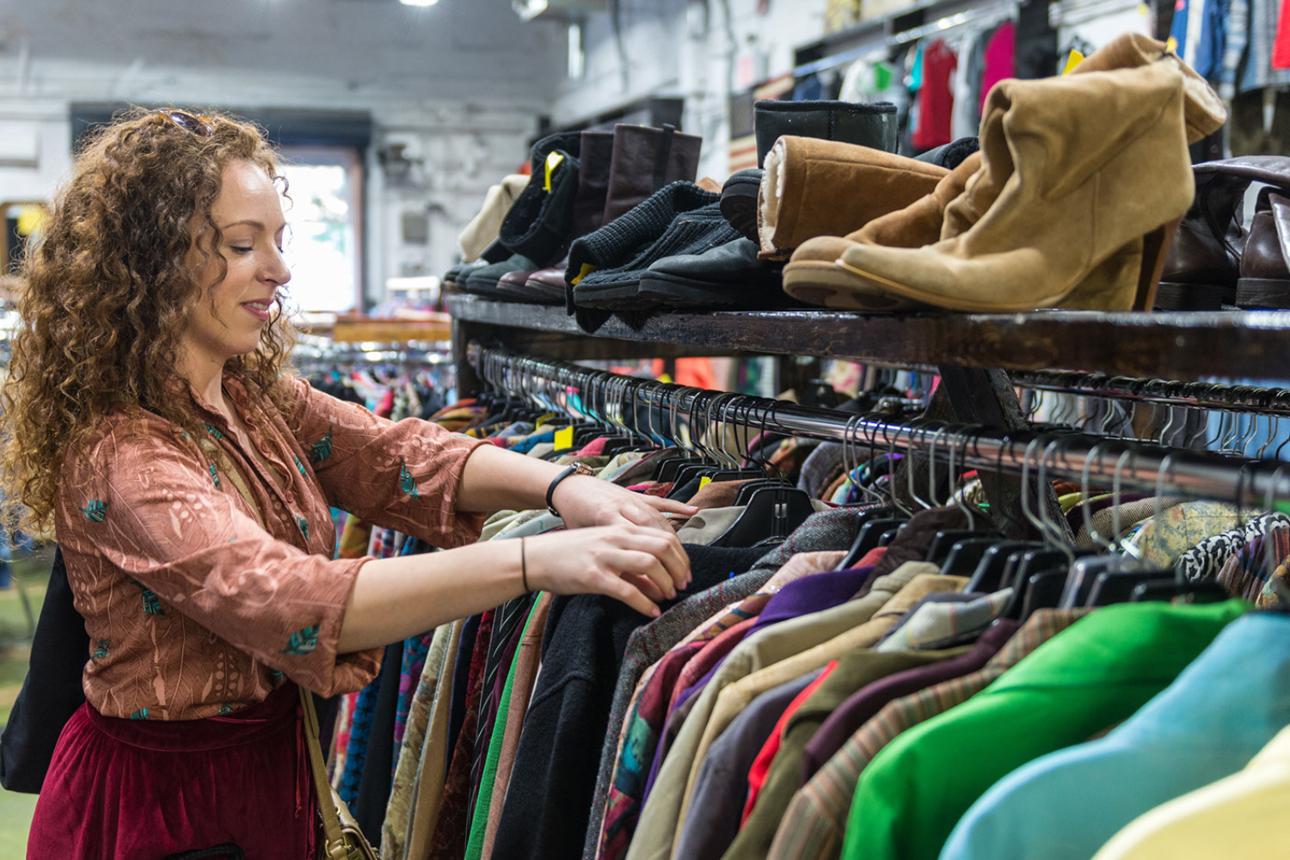
Thrift shopping sounds simple: walk into a secondhand store, find something amazing for a few dollars, pay, and leave.
In reality, it can feel more like an archaeological expedition.
You walk through endless racks, pick up twenty shirts, find three things you like, discover that none of them are your size, and somehow spend three hours looking at clothes you would never actually wear.
Thrifting doesn't have to be that way.
With a little planning, you can make your thrift trips faster, more enjoyable, and much more successful. The goal isn't to search through everything. It's to quickly identify the things worth your attention and ignore the rest.
Here's how to thrift shop without wasting your entire afternoon.


1. Know What You're Looking For Before You Go


The biggest mistake beginners make is entering a thrift store with absolutely no plan.
You don't need a rigid shopping list, but you should have a general idea of what you're looking for.
For example:
- A denim jacket
- Black trousers
- Oversized sweaters
- Vintage T-shirts
- A work bag
- Neutral-colored tops
- A specific type of shoe
Having a target immediately makes the racks easier to navigate.
Instead of thinking, "Could I buy this?", ask:
"Is this something I've actually been looking for?"
That one question can save you a surprising amount of time.
2. Set a Time Limit
Before you walk into the store, decide how long you're willing to shop.
Maybe it's 30 minutes, 45 minutes, or an hour.
Set a timer on your phone if necessary.
A time limit prevents the classic thrift-shopping trap: "I'll just look through one more rack."
One rack becomes five racks. Five racks become another section. Suddenly you've spent two hours comparing nearly identical sweaters.
A time limit forces you to prioritize.
If you don't find anything after your chosen amount of time, that's okay.
Leaving empty-handed is better than buying something you don't need just because you spent a long time shopping.
3. Check the Best Sections First
Not every part of a thrift store deserves equal attention.
If you're looking for a particular item, go directly to that section.
Looking for jeans? Go to jeans.
Looking for jackets? Go to jackets.
Looking for home décor? Skip the clothing racks entirely.
If you don't have a specific target, start with categories where you tend to find the most useful pieces.
This prevents you from wandering randomly around the store.
Think of thrift shopping like a treasure hunt—but one where you already know which part of the map contains the treasure.
4. Learn to Scan, Not Inspect Everything


You don't need to pull every item off the rack.
Instead, learn to scan.
Look at:
- Color
- Pattern
- Fabric
- Shape
- Size
- Brand
- Overall condition
If you're looking for a black wool coat, for example, you can quickly scan the rack for dark colors and coat-like shapes.
There's no reason to carefully examine a bright floral summer dress when you're shopping for winter outerwear.
The faster you become at scanning, the less exhausting thrifting becomes.
5. Check the Fabric and Condition Quickly
Once something catches your attention, inspect it before spending time trying it on.
Look for:
- Stains
- Holes
- Loose stitching
- Missing buttons
- Broken zippers
- Excessive pilling
- Unusual odors
- Damaged fabric
Some problems are easy to repair. Others aren't worth the effort.
Ask yourself:
"Would I still want this if it weren't incredibly cheap?"
If the answer is no, put it back.
A low price doesn't make a bad purchase a good purchase.
6. Don't Get Distracted by Brand Names


Finding a recognizable brand at a thrift store can be exciting.
But a famous label doesn't automatically mean you've found a great item.
You still need to consider:
- Does it fit?
- Is it comfortable?
- Is it in good condition?
- Would you actually wear it?
- Does it work with your existing wardrobe?
A lesser-known brand can sometimes be a much better purchase than an expensive label that doesn't suit you.
Buy the item, not the name on the tag.
7. Have a Simple "Try-On Test"
If an item makes it through your first inspection, ask yourself three questions:
Does it fit?
Don't buy something simply because you might fit into it someday.
Do I like how it looks on me?
Something can look incredible on a hanger and completely different when worn.
Can I imagine wearing it soon?
If you're already imagining a hypothetical future lifestyle in which you'll wear it, that's a warning sign.
If you can't think of at least two or three outfits you could make with the item, consider leaving it behind.
8. Avoid the "It's Only $5" Trap
This is one of the most dangerous sentences in thrift shopping:
"It's only $5."
Five dollars doesn't sound like much.
But five unnecessary purchases are $25. Ten are $50.
The whole point of thrifting is to find useful things at good prices—not to accumulate inexpensive things you don't need.
Before buying something, ask:
Would I choose this if it cost three times as much?
If you wouldn't, there's a good chance you're buying it because it's cheap rather than because you actually want it.
9. Visit at the Right Time


If possible, avoid the busiest shopping periods.
A crowded store means slower browsing, longer fitting-room waits, and more competition for popular items.
A quieter visit lets you move through the racks efficiently.
You may also discover that different stores have different restocking patterns. If you find a store you really like, pay attention to when new merchandise tends to appear.
You don't need to visit constantly.
A strategic visit can be more useful than several random trips.
10. Create a "Maybe" Pile
Don't immediately decide whether every item is a yes or no.
If the store allows it, create a small group of items you're considering.
Then step away from the racks.
Look at everything together.
You'll often discover that the item you were excited about five minutes ago isn't actually that special.
This is especially useful for clothing.
Ask:
"If I could only take one thing home, would I choose this?"
If the answer is no, it may not deserve a place in your wardrobe.
11. Know When to Leave
This might be the most important thrift-shopping skill of all.
You don't have to find something.
Sometimes you walk into a store, look around, and realize there isn't anything you want.
Leave.
Don't start inventing reasons to buy something simply because you made the trip.
The goal isn't to leave the store carrying a bag.
The goal is to leave with something you genuinely wanted at a price you're happy with.
The 30-Minute Thrift Shopping Strategy
If you want to make your next trip especially efficient, try this simple system:
First 5 minutes:
Walk through the store and identify the sections worth visiting.
Next 10 minutes:
Quickly scan the relevant racks and pull out promising items.
Next 10 minutes:
Inspect condition, check sizes, and try on your strongest options.
Final 5 minutes:
Choose what you genuinely want and put everything else back.
That's it.
No endless wandering. No buying random things because they're cheap. No spending an entire afternoon wondering where the time went.
Final Thought
Good thrifting isn't about having unlimited patience.
It's about having good filters.
Know what you're looking for, scan quickly, inspect carefully, avoid the "it's cheap" trap, and don't be afraid to leave empty-handed.
The best thrift shoppers aren't necessarily the people who spend the most time searching.
They're the people who can walk into a crowded store, recognize something worth buying, and say:
"Yep. That's the one." 🛍️