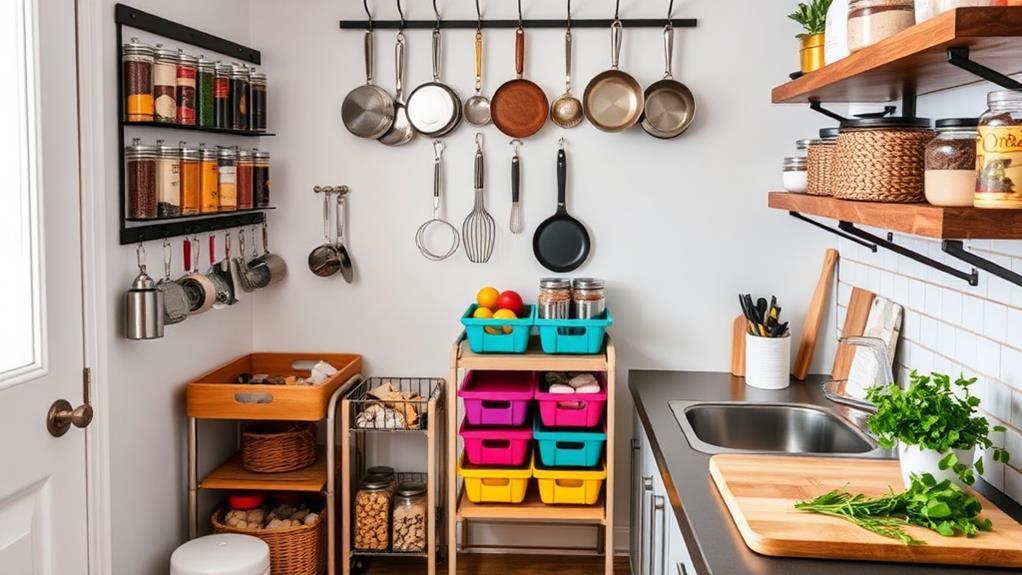
A perfectly organized kitchen looks great in photos.
Everything is neatly stacked, the pantry containers match, and somehow there isn't a single random food packet hiding behind the toaster.
Real kitchens aren't like that.
Real kitchens get used.
Drawers collect takeout menus. Containers lose their lids. Spices migrate into random cupboards. Someone puts a frying pan in the wrong place and suddenly the entire cabinet becomes impossible to navigate.
The goal of kitchen organization shouldn't be perfection.
It should be making your kitchen easy to use and easy to reset.
The best systems are simple enough that you can maintain them even when you're tired.
Here are practical kitchen organization tips that actually stick.


1. Start by Removing Things, Not Buying Organizers


Before you buy baskets, containers, shelves, or drawer dividers, take a look at what you actually own.
A cluttered kitchen often isn't an organization problem.
It's a too-much-stuff problem.
Pull out items you haven't used in a long time.
Look for:
- Duplicate utensils
- Chipped plates
- Containers without lids
- Lids without containers
- Expired food
- Appliances you never use
- Old spices
- Broken gadgets
- Excessive mugs
- Takeout containers you keep "just in case"
You don't need five different tools that perform the same basic task.
The less stuff you have, the easier organization becomes.
2. Store Things Where You Actually Use Them


This is one of the most important organization principles.
Don't organize your kitchen based on where things look nice.
Organize it based on where you use them.
Keep frequently used cooking utensils near the area where you prepare food.
Store everyday plates and glasses somewhere easy to reach.
Keep coffee supplies close to your coffee machine or kettle.
Store pots and pans near the stove.
This creates simple activity zones.
Instead of walking across the kitchen every time you cook, you'll have the tools you need within easy reach.
3. Create Simple Kitchen Zones
A useful kitchen can be divided into a few basic zones.
Prep Zone
Cutting boards, knives, mixing bowls, and commonly used ingredients.
Cooking Zone
Pots, pans, spatulas, cooking oils, and frequently used seasonings.
Cleaning Zone
Dish soap, sponges, dishwasher supplies, and cleaning products.
Food Storage Zone
Containers, wraps, foil, and storage bags.
Breakfast or Coffee Zone
Coffee, tea, mugs, sugar, and breakfast essentials.
The exact zones will depend on your kitchen layout.
The important thing is that similar activities have their own areas.
4. Make Your Most-Used Items the Easiest to Reach


Not everything in your kitchen deserves prime real estate.
If you use your coffee maker every morning, it shouldn't be hidden at the back of a cabinet.
If you use a stand mixer once every six months, it probably doesn't need to occupy valuable counter space.
Think about frequency.
Daily use
Keep within easy reach.
Weekly use
Store nearby but out of the way.
Occasional use
Use higher shelves, deeper cabinets, or storage areas.
This simple system prevents your kitchen from becoming crowded with things you barely use.
5. Fix the Container Chaos
Few things make a kitchen feel more chaotic than a cabinet full of plastic containers.
The solution is surprisingly simple.
Take everything out.
Match containers with their lids.
Discard damaged pieces.
Then decide how much storage you actually need.
Store containers with their lids together whenever possible.
You can also stack containers by size.
Avoid keeping dozens of containers just because they're technically usable.
If you constantly have to dig through a pile to find the right lid, you have too many.
6. Make Your Pantry Easier to See


A pantry becomes messy when you can't see what you already have.
Before buying fancy containers, simply group similar items together.
For example:
Breakfast
Cereal, oats, spreads
Baking
Flour, sugar, baking powder
Snacks
Crackers, nuts, bars
Pasta and grains
Pasta, rice, noodles
Canned goods
Beans, tomatoes, soups
If you use containers, choose them because they make your pantry easier to use—not simply because they look good.
And don't transfer every single food item into a container.
Sometimes keeping things in their original packaging is perfectly practical.
7. Use Vertical Space


Many kitchens have plenty of storage space but don't use the vertical area efficiently.
Shelf risers can create additional levels inside cabinets.
Hooks can be useful for mugs or utensils.
Vertical dividers can help organize baking sheets, cutting boards, and trays.
The goal isn't to fill every available centimeter.
It's to make better use of the space you already have.
8. Keep Countertops Mostly Clear
Your countertop is valuable working space.
If every appliance, container, spice jar, and decorative object lives there, cooking becomes harder.
Keep out the things you use frequently.
Everything else should have a home.
A useful rule is:
If you don't use it most days, consider storing it.
This doesn't mean your kitchen needs to look empty.
A fruit bowl, coffee machine, cutting board, or a few decorative items can make a kitchen feel lived-in.
The goal is simply to leave enough space to actually work.
9. Give Every Category a Home


Organization becomes much easier when every category has a designated place.
For example:
One drawer: Cooking utensils
One drawer: Cutlery
One cabinet: Plates and bowls
One shelf: Mugs
One area: Food containers
One cabinet: Cleaning supplies
The exact setup doesn't matter.
What matters is that when you finish using something, you know exactly where it belongs.
That is what makes an organization system sustainable.
10. Don't Over-Organize Your Refrigerator
Your refrigerator doesn't need to look like a professional grocery store.
But a few simple habits can make a huge difference.
Keep similar foods together.
For example:
- Dairy
- Vegetables
- Fruit
- Sauces
- Drinks
- Leftovers
Keep foods that need to be used soon somewhere visible.
You can also designate one area as an "eat first" section.
This helps prevent food from getting forgotten at the back of the refrigerator.
11. Make Cleaning Part of the System


An organized kitchen won't stay organized if cleaning requires a huge effort every evening.
Build small resets into your routine.
After cooking:
- Put ingredients away
- Wipe the main counter
- Wash or load dishes
- Return utensils to their homes
- Quickly check the sink
It doesn't have to take long.
Even a five-minute reset can prevent small messes from becoming a major weekend project.
12. Create a "Reset" Routine
One of the reasons kitchen organization systems fail is that people treat organization as a one-time project.
It isn't.
Your kitchen is used every day.
So create a simple reset routine.
Every evening
Clear the countertops and sink.
Once a week
Check the refrigerator for food that needs to be used.
Once a month
Check pantry items and reorganize problem areas.
Every few months
Declutter duplicate or unused kitchen items.
These small maintenance sessions are much easier than completely reorganizing your kitchen every few months.
13. Organize for the People Who Actually Use the Kitchen


If you share your kitchen with other people, don't create a system that only makes sense to you.
Everyone should know:
Where things go.
What belongs together.
Which items are used most often.
If someone repeatedly puts an item in the "wrong" place, consider whether the system is actually intuitive.
Organization should reduce confusion—not create more rules.
A Simple Kitchen Organization Checklist
If you're starting from scratch, follow this order:
Step 1
Remove expired, broken, duplicate, and unused items.
Step 2
Group similar items together.
Step 3
Create zones based on how you use the kitchen.
Step 4
Move frequently used items into easy-to-reach locations.
Step 5
Use vertical space where helpful.
Step 6
Organize containers and pantry items.
Step 7
Clear unnecessary items from countertops.
Step 8
Give every category a permanent home.
Step 9
Create a five-minute daily reset.
Step 10
Adjust the system after you've actually used it for a few weeks.
The Most Important Rule
Here's the secret to organization that actually sticks:
Make the organized option the easy option.
If putting something away takes 30 seconds and finding it takes 10 seconds, people are more likely to maintain the system.
If putting something away requires opening three cabinets, moving two containers, and reaching behind a stack of dishes, it's eventually going to end up on the counter.
Your organization system should make life easier—not require constant discipline.
Final Thought
A well-organized kitchen isn't the kitchen with the most containers, labels, or perfectly matching storage bins.
It's the kitchen where you can quickly find what you need, easily put things away, and comfortably prepare a meal without moving ten objects out of the way first.
Start by removing what you don't need.
Then group similar things together, create simple zones, keep frequently used items accessible, and give everything a logical home.
Most importantly, don't try to maintain perfection.
Your kitchen is supposed to be used.
A little mess is normal.
The goal is to make it easy to reset when life gets busy.
Because the best organization system isn't the one that looks perfect on day one.
It's the one that still works six months later. 🍳✨