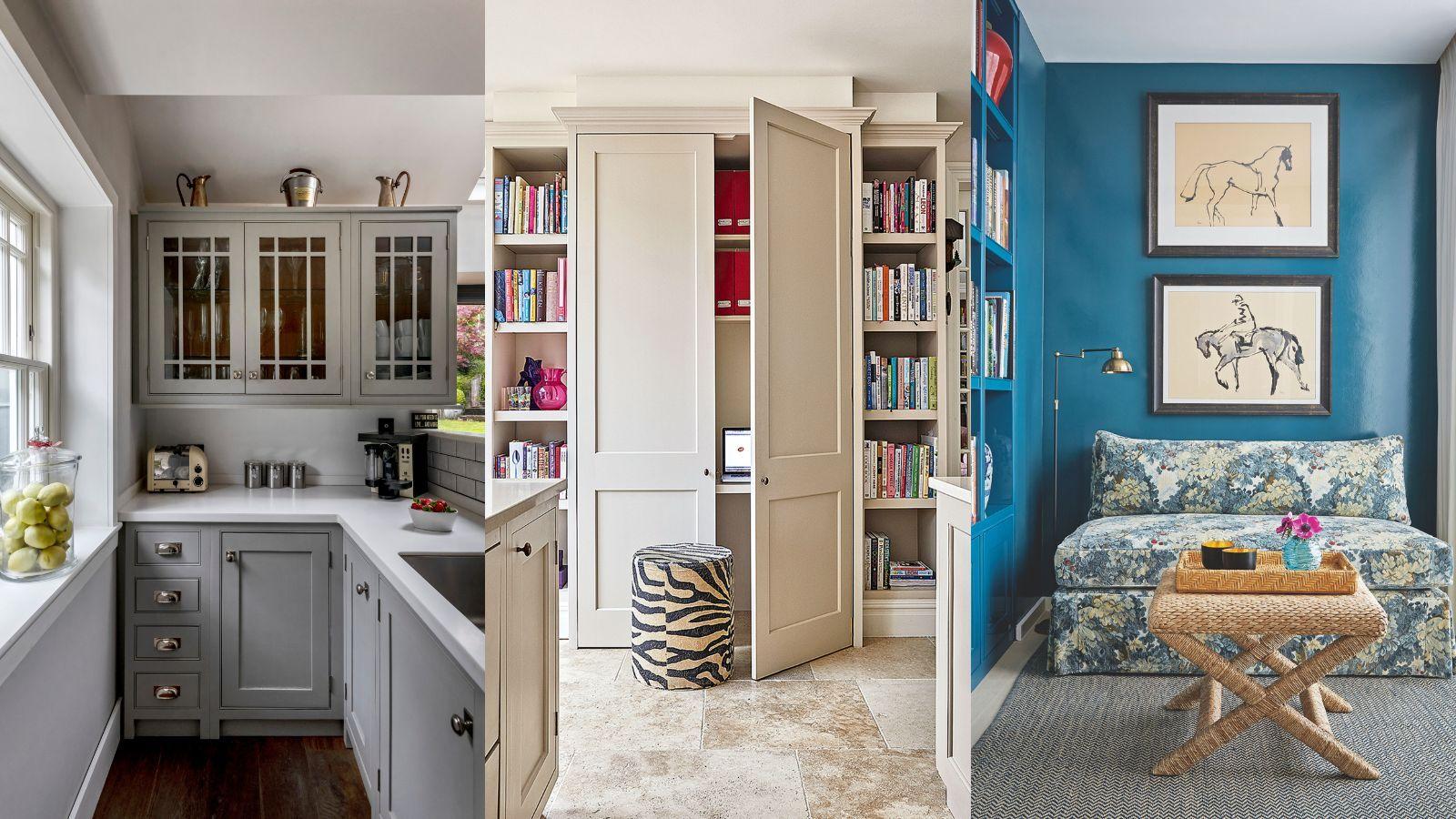
Living in a small apartment doesn't mean you have to live with constant clutter. The trick is not to somehow create more square footage, but to make better use of the space you already have.
In a compact home, every wall, corner, cabinet, and piece of furniture can have a purpose. The most effective storage solutions are usually simple: using vertical space, choosing furniture that does more than one job, organizing hidden areas, and getting rid of things you no longer use.
The goal isn't to make your apartment look like a showroom. It's to create a home where everything has a place and everyday items are easy to find.

1. Use Your Walls
One of the biggest mistakes in a small apartment is focusing only on floor space.
Look upward.
Walls provide valuable storage opportunities without taking away much walking space. Floating shelves, tall bookcases, wall-mounted hooks, pegboards, and narrow cabinets can all turn unused wall space into practical storage.
For example, a few shelves above a desk can hold books and office supplies. Hooks near the entrance can hold bags and jackets. A narrow shelf in the kitchen can provide a home for spices and frequently used ingredients.
Vertical storage is particularly useful because it increases storage capacity without expanding the footprint of the room. Current small-space design guidance similarly emphasizes tall shelving and making use of wall height. (DesignCafe)
2. Make the Space Under Your Bed Work
The area underneath your bed is valuable storage real estate.
Instead of allowing it to become a place where random items disappear, use containers or drawers to organize things properly.
It's a good location for items you don't need every day, such as:
- Extra bedding
- Seasonal clothing
- Shoes
- Travel bags
- Winter accessories
- Spare towels
If you're buying a new bed, consider a design with built-in drawers or lifting storage.
If you already have a standard bed, low-profile storage boxes can make use of the empty space underneath.
The important thing is to keep the containers organized. There's little benefit in having hidden storage if you have to pull everything out just to find one item.
3. Choose Furniture That Does More Than One Job
When space is limited, every large piece of furniture should ideally earn its place.
Instead of a basic coffee table, consider one with shelves or hidden storage.
Instead of a simple ottoman, choose one that opens for storage.
A bed with drawers can replace a separate dresser for some items. A storage bench can provide both seating and a place to keep blankets, shoes, or other belongings.
Multi-purpose furniture can reduce the amount of furniture you need while increasing the amount of storage available. Recent small-space design advice also highlights storage furniture and hidden compartments as ways to improve function without making a room feel crowded. (DesignCafe)
4. Make Your Kitchen Work Harder
Small kitchens can become cluttered incredibly quickly.
Instead of filling your counters with appliances and containers, look for unused areas inside cabinets and above counters.
Shelf risers can create another level inside a cabinet. Hooks can provide a place for mugs or utensils. A slim rolling cart can fit into a narrow gap and provide additional storage for pantry items.


Clear containers can also help you see what you already have, particularly for dry foods.
Try grouping similar items together:
Breakfast items → one area
Spices → one area
Cooking ingredients → one area
Snacks → one area
Cleaning supplies → another area
The goal is to make your kitchen easier to use rather than simply making everything look neat.
5. Use the Back of Doors
Doors are often forgotten storage surfaces.
An over-the-door organizer can provide surprisingly useful space for shoes, cleaning products, toiletries, accessories, or small household items.
A few hooks on the inside of a closet door can also provide a convenient place for bags, belts, scarves, or other accessories.
This is especially useful in rental apartments because many door-mounted storage solutions don't require permanent construction.
Just make sure the organizer doesn't interfere with the door closing properly.
6. Give Your Entryway a Simple System
The entrance to your apartment can quickly become a clutter hotspot.
Shoes, keys, bags, mail, jackets, and packages all tend to collect near the door.
Instead of trying to organize these items after they pile up, create a simple landing zone.
You might need only:
- A small tray for keys
- A few wall hooks
- A shoe rack or basket
- A small container for mail
The important thing is that every frequently used item has an obvious place to go.
A recent small-apartment organization guide recommends creating one dedicated landing zone for everyday items such as keys, bags, shoes, and mail. (Life Sorted)
7. Don't Ignore Awkward Corners
That strange corner between two pieces of furniture may look useless, but small spaces often have valuable areas that aren't being used.
A narrow shelving unit can fit into a tight corner.
A slim rolling cart can work between the refrigerator and counter.
A small cabinet can fit underneath a desk.
A tall, narrow bookcase can take advantage of vertical space without requiring much floor area.
Before buying anything, measure the area carefully.
A storage solution that is too large can make a small room feel even smaller.
8. Organize Your Closet by Frequency
You don't need to keep every item of clothing equally accessible.
Put the clothes you wear regularly at eye level and within easy reach.
Seasonal clothing can go on higher shelves or into under-bed storage.
Use matching or slim hangers if they help you fit clothing more efficiently, but don't feel that you need to buy dozens of organization products.
The best closet system is one that makes it easy to put things away.
If putting an item back is difficult, you're more likely to leave it somewhere else.
9. Use Baskets and Bins Carefully
Storage baskets can make a room look organized, but buying too many containers can actually create another problem.
Before purchasing a bin, decide what it will contain.
A basket for blankets makes sense.
A small box for cables makes sense.
A container for cleaning supplies makes sense.
But a collection of empty baskets sitting around the apartment isn't really storage.

Use labels when necessary, especially for items stored in less accessible places.
The idea is to make your belongings easier to locate, not simply hide them.
10. Make Your Bathroom More Efficient
Bathrooms are often among the smallest rooms in an apartment.
Use vertical storage wherever possible.
A narrow shelving unit can hold towels and toiletries. Hooks can hold towels or robes. Small containers can organize skincare and grooming products.
Inside cabinets, shelf risers and small organizers can prevent products from becoming one large pile.
Try to keep everyday products accessible and move rarely used items to higher or less convenient storage areas.
11. Use One Small Area as a Home Office
If you work or study from your apartment, you don't necessarily need an entire room.
A compact desk against a wall can be enough.
Use vertical shelves above the desk for notebooks, books, and supplies. Cable organizers can keep chargers under control.
When your workday ends, put everything away.
This helps prevent your entire apartment from feeling like an office.
12. Declutter Before Buying More Storage
This might be the most important tip of all.
Sometimes the problem isn't a lack of storage.
It's simply too much stuff.
Before buying another shelf, basket, or cabinet, go through the things you already own.
Ask yourself:
Do I use this?
Would I buy it again today?
Do I have another item that does the same job?
Would I miss it if it were gone?
You don't need to throw away everything that isn't useful every day. Sentimental items and occasional-use belongings have value too.
But removing things you genuinely don't need makes every storage system work better.
A current decluttering approach from Better Homes & Gardens emphasizes clearing items out, categorizing them, deciding what to keep, and only then containing what's left. (Better Homes & Gardens)
13. Keep Frequently Used Items Easy to Reach
One common storage mistake is putting everyday items into difficult-to-access places.
If you use something every morning, it shouldn't be hidden at the back of a cabinet.
Think about your routines.
Put coffee supplies near the coffee maker.
Keep everyday shoes near the entrance.
Store frequently used cooking utensils where you can reach them easily.
Keep your most-used clothing at the front of your closet.
Good organization isn't just about where things fit. It's about how easily you can use them.
14. Create a Five-Minute Reset
Even the best storage system won't stay organized by itself.
At the end of each day, spend five minutes putting things back.
Return shoes to their place.
Put dishes away.
Clear the kitchen counter.
Return clothes to the closet.
Put keys and bags back in the entryway.
This tiny habit can prevent clutter from becoming overwhelming.
You don't need to spend an entire Saturday reorganizing your apartment if you maintain the system a little every day.
Final Thoughts
A small apartment can be comfortable, attractive, and surprisingly functional.
The secret isn't finding one magical storage product. It's combining several simple ideas that work with the way you actually live.
Use your walls. Make use of the space under your bed. Choose multi-purpose furniture. Organize your kitchen cabinets. Use doors and awkward corners. Keep everyday items accessible. And most importantly, remove things you no longer need.
Good storage should make your life easier, not make your home feel like a warehouse full of containers.
Start with one room or even one small corner. Fix the biggest storage problem first, then move on to the next.
Over time, these small changes can make your apartment feel more spacious, calmer, and much easier to live in.