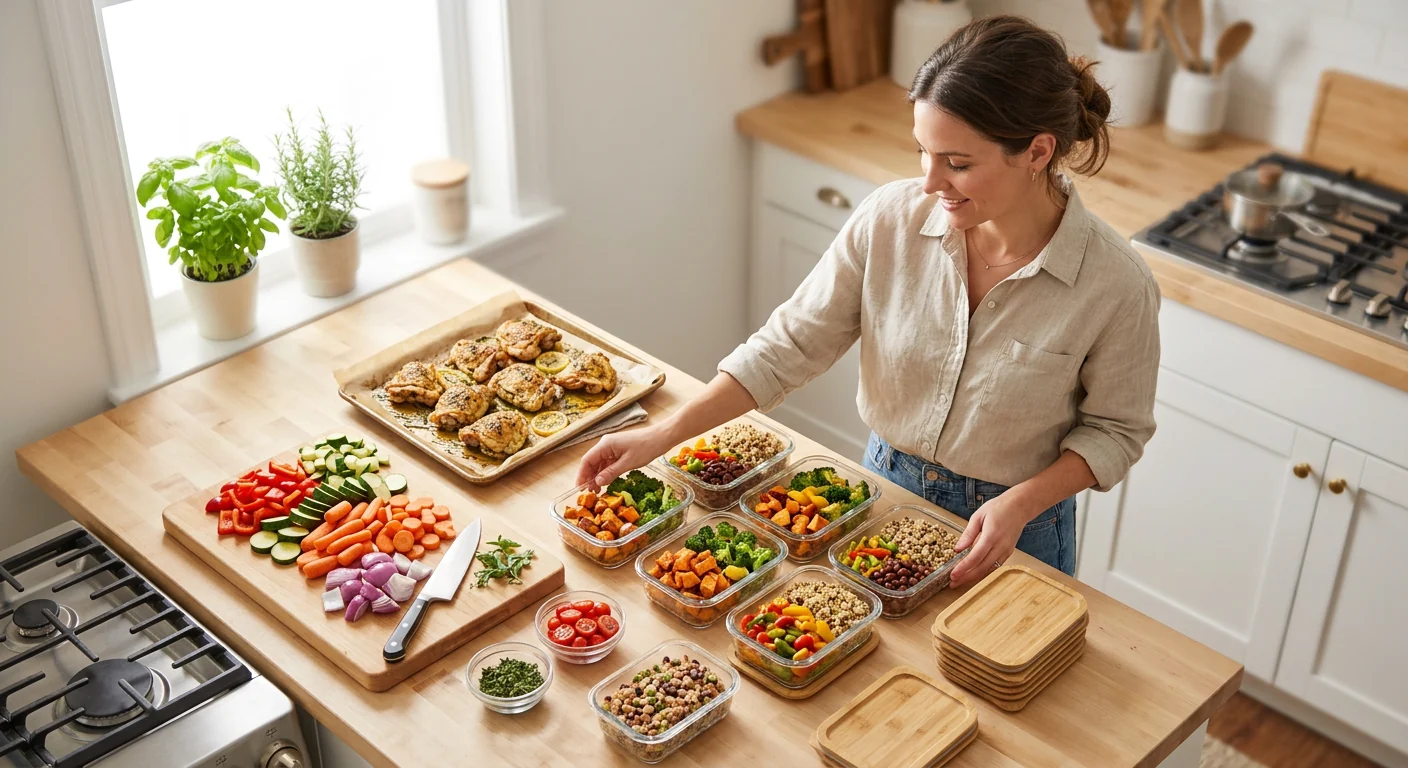
Sunday meal prep sounds great in theory: spend a few hours in the kitchen, prepare everything for the week, and never worry about dinner again. In reality, many people start with ambitious plans and end up spending most of the day cooking.
The good news is that meal prep doesn't have to mean cooking seven identical meals. A more realistic approach is to prepare a few flexible ingredients that can be mixed and matched throughout the week.
You might cook a batch of rice, roast some vegetables, prepare chicken or beans, make a simple sauce, and wash some fresh produce. Those ingredients can then become bowls, salads, wraps, sandwiches, or quick dinners.
The goal isn't perfection. The goal is to make your weekdays easier.
Start With a Simple Plan
Before you turn on the oven, spend 10–15 minutes deciding what you actually need.
Think about your schedule for the coming week. How many lunches will you eat at home? Which evenings will be busy? Will you have time to cook on Wednesday or Thursday?
Instead of planning every meal in detail, choose two or three main meal combinations.
For example:
- Chicken, rice, and roasted vegetables
- Chickpea and vegetable wraps
- Pasta with roasted vegetables and a simple sauce
- Overnight oats or yogurt for breakfast
- Fresh fruit and nuts for snacks
Planning before shopping can help prevent buying ingredients that never get used. Cleveland Clinic also recommends choosing a consistent prep day and making a game plan before starting. (Cleveland Clinic)
Think in Components, Not Complete Meals

One of the biggest mistakes beginners make is preparing five or six identical containers of food.
That can become boring quickly.
Instead, prepare components.
For example, on Sunday you could prepare:
Protein: grilled chicken, eggs, beans, or tofu
Carbohydrate: rice, potatoes, pasta, or quinoa
Vegetables: broccoli, carrots, peppers, zucchini, or green beans
Fresh ingredients: salad greens, tomatoes, cucumber, herbs
Sauce: yogurt dressing, salsa, pesto, or another favorite sauce
During the week, combine these ingredients in different ways.
Monday might be a chicken and rice bowl. Tuesday could be a wrap using the same chicken and vegetables. Wednesday could become a salad.
This gives you variety without requiring completely different recipes every day.
Don't Try to Cook Everything
A realistic meal-prep session doesn't need to involve every meal of the week.
Choose foods that actually benefit from being prepared ahead of time.
Rice, roasted vegetables, cooked beans, soups, sauces, boiled eggs, and some proteins can be useful building blocks.
Other foods are better prepared closer to when you eat them. Fresh salads, avocado, crispy toppings, and some fruits can lose their texture when stored for too long.
This is why a combination of batch cooking and small midweek preparation can work better than trying to prepare everything on Sunday.
Create a Simple Sunday Timeline

You don't need to spend your entire Sunday in the kitchen.
Try dividing your preparation into stages.
1. Prepare the kitchen
Clean your workspace and take out your cutting boards, knives, pans, storage containers, and other equipment.
2. Start the longest cooking tasks
Put rice, potatoes, roasted vegetables, or other foods that take longer to cook on first.
3. Chop vegetables
While something is cooking, wash and chop vegetables.
4. Prepare your protein
Cook your chicken, tofu, beans, eggs, or another protein source.
5. Make one or two sauces
A simple sauce can make the same ingredients taste completely different during the week.
6. Cool and organize
Once the food is ready, allow appropriate foods to cool and transfer them into clean storage containers.
Working on several tasks at the same time can make your prep session much more efficient.
Choose the Right Containers
Good storage containers make meal prep much easier.
Glass containers are useful because many are designed for refrigerator, freezer, or microwave use, depending on the specific product. Whatever container you choose, check the manufacturer's instructions for temperature and appliance compatibility. (Healthline)
You don't need 20 identical containers.
Start with a small collection of containers in different sizes. Smaller containers are particularly useful for sauces, dressings, snacks, and toppings.
Clear containers can also make it easier to see what you have available in the refrigerator.
Label Everything
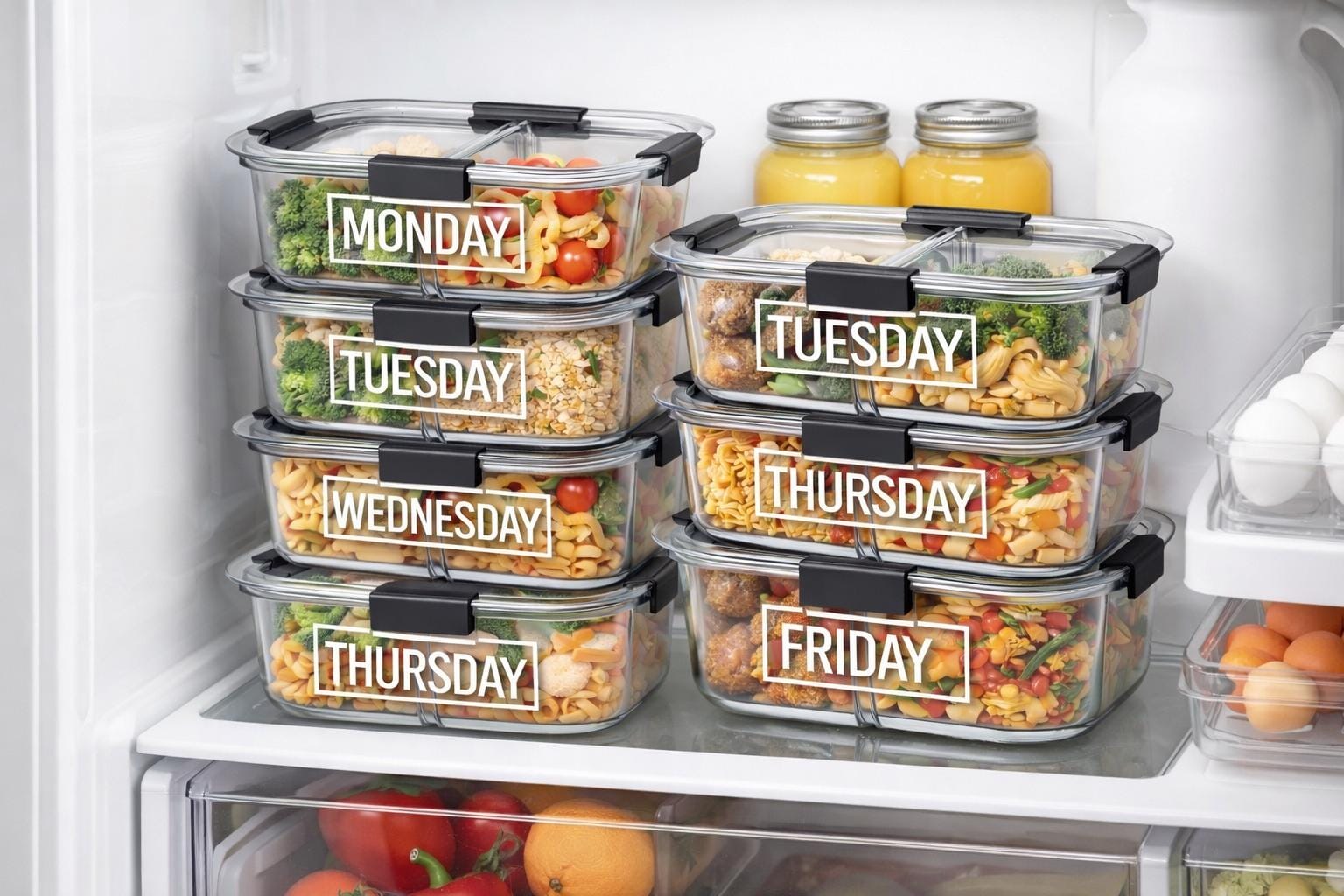
Labels may seem unnecessary, but they can make a surprisingly big difference.
Write the name of the food and the date it was prepared. If you're freezing something, add the date before putting it in the freezer.
This prevents the classic situation where you open the refrigerator and wonder, “When did I make this?”
Keeping similar meals together can also make weekday mornings easier. You should be able to open the refrigerator and immediately see what's available.
Keep Sauces Separate
Nobody likes a soggy salad.
If you're preparing salads, wraps, or meals with crispy ingredients, store sauces and dressings separately whenever possible.
Add the dressing shortly before eating instead of mixing it into the entire container on Sunday.
The same idea works for crunchy toppings, fresh herbs, nuts, seeds, and other ingredients that can lose their texture when stored with moist foods.
Cleveland Clinic specifically recommends keeping sauces and dressings in smaller containers to help prevent ingredients such as salads from becoming soggy. (Cleveland Clinic)
Use Your Freezer
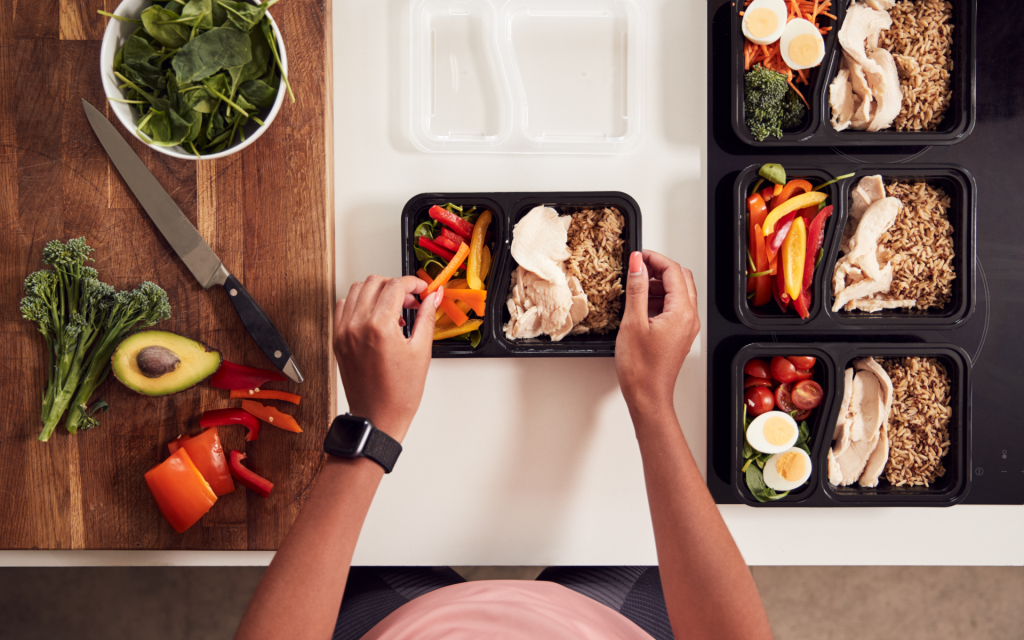
The freezer can make your meal-prep routine much more flexible.
If you've prepared more food than you expect to eat within the refrigerator-storage window, consider freezing suitable portions instead of letting them sit in the refrigerator all week.
Soups, stews, sauces, cooked grains, and some prepared meals can work particularly well for freezing.
Remember to use freezer-safe containers and follow appropriate food-storage practices.
Don't Aim for Seven Perfect Days
This may be the most important rule of realistic meal prep.
Your week probably won't go exactly according to plan.
Maybe you have lunch with a colleague on Tuesday. Perhaps you're too tired to cook on Wednesday. Maybe Friday becomes pizza night.
That's completely fine.
Meal prep should make your life easier, not create another obligation.
Instead of thinking, “I must eat everything I prepared,” think of your Sunday cooking as creating options.
You've already done some of the work. Now you can adjust your meals according to your schedule and appetite.
A Simple Beginner Meal-Prep Example
Here's an easy starting point:
Breakfast: overnight oats + fruit
Lunch: chicken or chickpea rice bowls
Dinner: roasted vegetables + protein + grain
Snacks: fruit, yogurt, nuts, or cut vegetables
For the main meal, prepare:
- One protein
- One grain or starch
- Two vegetables
- One sauce
- A few fresh toppings
That's enough to create several different meals without turning Sunday into an all-day cooking project.
Final Thoughts
Sunday meal prep doesn't need to look perfect or Instagram-worthy.
The most useful system is the one you can actually maintain.
Start small. Prepare a few versatile ingredients, store them properly, keep sauces separate, label your containers, and leave yourself enough flexibility to change your plans during the week.
Once you find a routine that works, you can gradually add more recipes and preparation techniques.
The ultimate goal isn't to have a refrigerator full of identical containers.
It's to make Monday morning easier, busy weeknights less stressful, and good food more convenient.