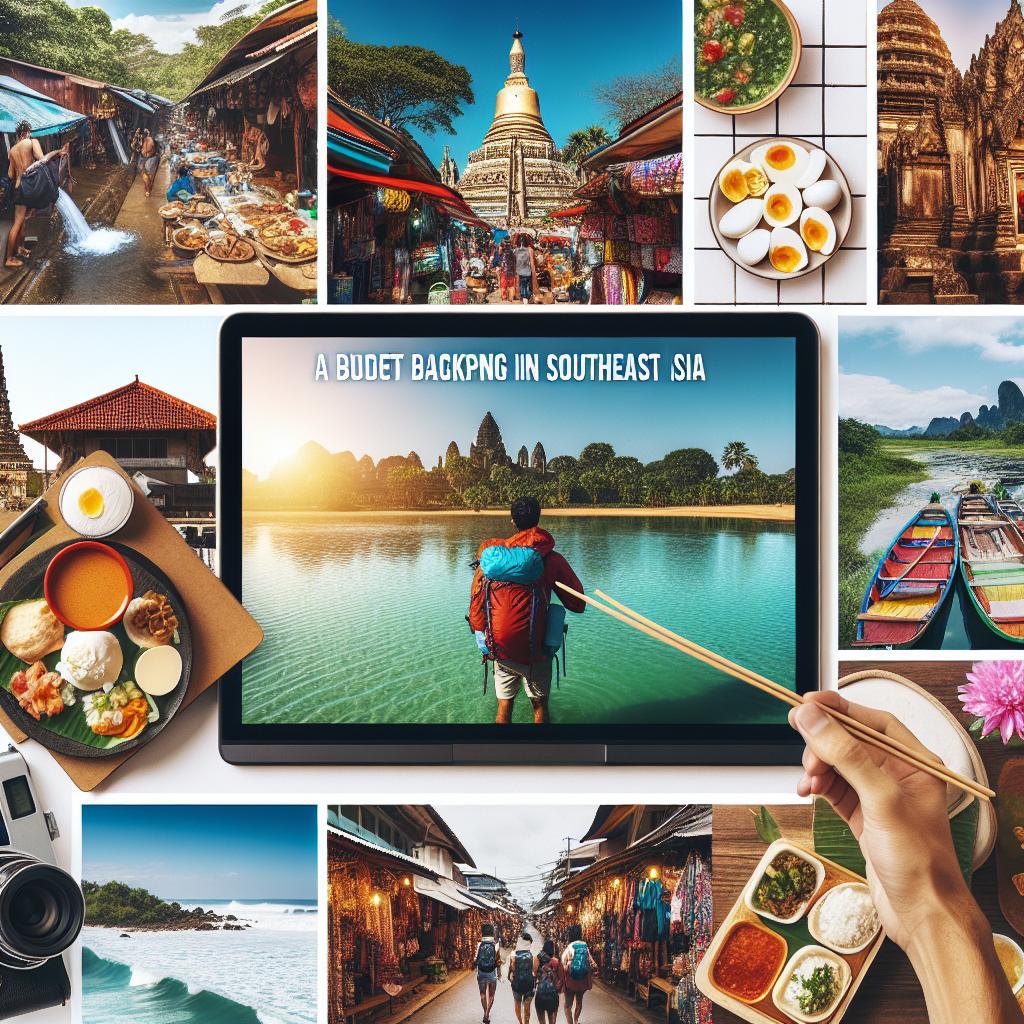
Southeast Asia has a reputation for being one of the world's best regions for budget travel.
And for good reason.
You can find affordable accommodation, inexpensive local food, public transportation, beautiful beaches, historic cities, and unforgettable experiences without spending luxury-hotel money.
But there's a catch.
A "cheap" destination can become surprisingly expensive if you're constantly taking taxis, booking last-minute flights, eating at tourist restaurants, and changing cities every two days.
The secret to traveling Southeast Asia on a tight budget isn't simply spending less.
It's spending your money where it actually matters.
Here's how to make your trip last longer without turning every day into a financial calculation.


1. Choose Your Countries Carefully


Southeast Asia isn't one single budget destination.
Costs vary significantly between countries, cities, islands, and tourist areas.
Your money can stretch differently depending on where you go and how you travel.
Popular backpacking destinations include:
- Vietnam
- Thailand
- Cambodia
- Laos
- Indonesia
- Malaysia
- The Philippines
Rather than trying to visit every country in one trip, choose two or three destinations that make sense geographically.
This saves money on transportation and gives you more time to actually experience each place.
2. Slow Travel Is Cheap Travel
One of the easiest ways to blow your budget is moving constantly.
It sounds exciting to visit:
Bangkok → Chiang Mai → Phuket → Singapore → Bali → Hanoi
in a couple of weeks.
But every move costs money.
Flights.
Buses.
Trains.
Taxis.
Airport transfers.
Extra accommodation.
And, perhaps most importantly, time.
Instead, spend several days—or even a week—in each destination.
You get to know the area, find inexpensive restaurants, learn the local transportation system, and avoid constantly paying for transfers.
The slower you travel, the easier it is to travel cheaply.
3. Stay in Budget Accommodation


Accommodation will probably be one of your biggest expenses, but it doesn't have to be.
Depending on the destination, you can choose from:
- Hostels
- Guesthouses
- Budget hotels
- Homestays
- Simple private rooms
Hostels are particularly useful for solo travelers because they can combine accommodation with opportunities to meet other travelers.
But don't automatically assume a hostel is always cheapest.
If you're traveling with a friend or partner, a basic private room can sometimes make more sense when the cost is split.
Compare the total price, not simply the advertised nightly rate.
Also check whether the accommodation includes things such as breakfast, Wi-Fi, lockers, or other useful amenities.
4. Eat Where Locals Eat


Food is one of the best parts of traveling through Southeast Asia.
And local food can also be one of the easiest ways to save money.
Instead of eating every meal at restaurants aimed at international tourists, look for:
- Local markets
- Small family-run restaurants
- Food stalls
- Busy neighborhood eateries
- Food courts
A simple bowl of noodles, rice dish, curry, or local breakfast can cost significantly less than a Western-style meal in a tourist area.
There's another advantage:
The busiest local restaurant is often busy for a reason.
If a place is full of local customers, that's usually a better sign than an empty restaurant with a giant menu translated into six languages.
5. Drink More Water, Less Alcohol
This sounds boring.
It isn't.
Alcohol can quietly destroy a travel budget.
A few beers at a tourist bar.
A cocktail at the beach.
A night out with other travelers.
Do that repeatedly and your "budget trip" becomes considerably more expensive.
Carry a reusable bottle where practical and use reputable refill stations or safe drinking-water sources available in your destination.
Save your spending for experiences you'll actually remember.
6. Use Local Transportation
One of the easiest ways to overspend is taking private transportation everywhere.
Depending on your destination, consider:
- Local buses
- Trains
- Public ferries
- Shared minivans
- Walking
- Metro systems
- App-based ride services where appropriate
You don't have to avoid taxis completely.
Sometimes they're the most practical option.
But you don't need one every time you travel two kilometers.
Walking can also be one of the best ways to experience a new city.
You see neighborhoods, markets, cafés, street life, and small details that you might completely miss from the back seat of a car.
7. Compare Flights With Overland Travel


Flights can save time, but they aren't always the cheapest option.
For shorter distances, compare:
Flight
Train
Bus
Shared minivan
An overnight train or bus can sometimes save you both transportation and one night's accommodation.
But don't choose an overnight journey purely because it's cheaper.
Consider comfort, safety, travel time, and how much energy you'll have when you arrive.
Saving a little money isn't worth ruining the next two days of your trip.
8. Book the Expensive Things First
Not everything needs to be booked months in advance.
But your biggest expenses deserve attention.
These may include:
- International flights
- Long-distance transportation
- Popular island accommodation
- Major tours
- Special activities
Research these first.
Then leave room for flexibility with smaller expenses.
Being flexible with dates can sometimes make a significant difference in transportation and accommodation costs.
9. Don't Overbook Your Trip
A common mistake is creating an itinerary so full that there's no room to breathe.
You don't need a paid activity every day.
Some of the best travel experiences are free or inexpensive:
- Walking around a city
- Visiting local markets
- Exploring temples where entrance is free or low-cost
- Swimming at public beaches
- Watching sunsets
- Hiking
- Exploring neighborhoods
- Sitting at a café
- People-watching
Your trip doesn't need to be a checklist of attractions.
10. Choose Experiences Carefully


Budget travel doesn't mean saying no to everything.
Instead, choose one or two experiences that genuinely matter to you.
Maybe that's:
- A snorkeling trip
- A cooking class
- A national park visit
- Scuba diving
- A multi-day trek
- A cultural tour
Spend money on those.
Then save elsewhere.
It's much more satisfying to spend a little extra on something you'll remember than to waste money on ten mediocre tourist activities.
11. Watch the Small Expenses
This is where many budgets quietly disappear.
A few dollars here.
A few dollars there.
Coffee.
Snacks.
Ride-hailing.
Souvenirs.
Convenience-store purchases.
Extra baggage.
Laundry.
By the end of the week, you've spent far more than expected.
You don't need to track every single coin.
But keep a rough daily budget.
For example:
Accommodation
Food
Transportation
Activities
Miscellaneous
If you're overspending in one category, you can adjust before your budget gets out of control.
12. Travel With a Carry-On-Sized Backpack When Possible


Packing light isn't just convenient.
It can save money.
A smaller bag can help you avoid checked baggage fees on airlines where cabin baggage rules allow it.
It also makes buses, trains, ferries, and walking between accommodation much easier.
You don't need ten outfits.
Southeast Asia is generally warm, so lightweight clothing can go a long way.
Pack clothes that can be washed and reused rather than bringing something different for every day.
13. Don't Forget Travel Insurance
This isn't the place to try to save every last dollar.
Travel insurance can protect you against certain unexpected expenses involving medical emergencies, trip interruptions, baggage issues, or other covered situations.
The exact coverage varies by policy, so read the terms carefully rather than assuming everything is included.
The cheapest policy isn't necessarily the best policy.
You're trying to protect your travel budget from a major unexpected expense.
14. Keep an Emergency Fund
Even if you're traveling on a tight budget, don't spend every dollar you've allocated to the trip.
Keep a small emergency reserve for situations such as:
- Unexpected transportation
- Lost belongings
- Accommodation changes
- Medical expenses
- Delays
- Last-minute bookings
Hopefully, you won't need it.
But having it can make a huge difference if something goes wrong.
A Simple Budget Strategy
If you're trying to keep your spending under control, divide your travel money into categories.
50% — Accommodation + transportation
These are often your biggest fixed costs.
25% — Food
Eat mostly local food and save occasional splurges for special meals.
15% — Experiences
Tours, attractions, activities, and entrance fees.
10% — Emergency/miscellaneous
Unexpected expenses, souvenirs, laundry, and other small costs.
These percentages aren't a universal rule.
Adjust them based on your destination and travel style.
The important thing is knowing where your money is going.
Things That Are Usually Worth Spending More On
Budget travel doesn't mean always choosing the absolute cheapest option.
Sometimes spending more is sensible.
Consider paying extra for:
Safety
Don't choose unsafe transportation or accommodation just to save a little.
Convenience
A direct train may be worth more than a complicated series of transfers.
Comfort
An overnight journey may be worth upgrading if you'll arrive exhausted otherwise.
Unique experiences
If there's something you've dreamed of doing, make room for it.
Budget travel works best when you decide what matters to you rather than simply trying to spend as little as possible.
Final Thought
Traveling Southeast Asia on a tight budget is less about being extremely frugal and more about making smart choices consistently.
Stay longer in fewer places.
Eat local food.
Use public transportation.
Choose simple accommodation.
Pack light.
Watch the small expenses.
And most importantly, spend money on experiences that genuinely matter to you.
You don't need a huge travel budget to have an incredible trip.
You just need to know where your money is going—and where it's actually worth spending. 🌴🎒✈️